
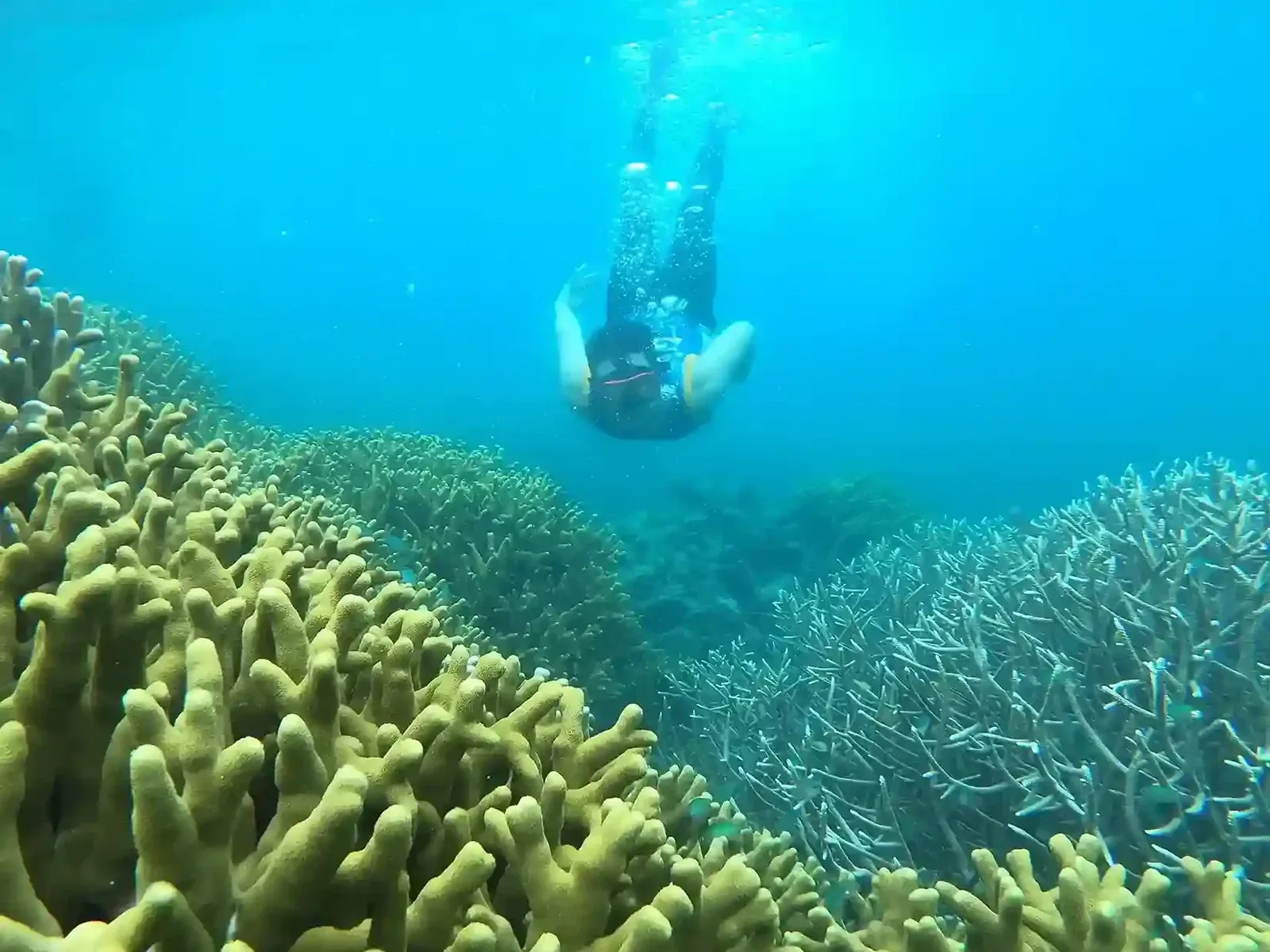
Diving in Lombok for Beginners: A First-Timer’s Guide
Diving in Lombok for beginners means easy, shallow reefs, gentle conditions, and professional instruction tailored to first-time divers. Lombok is good for beginners because the Gili Islands and several south and east Lombok bays offer calm, clear water, sandy bottoms for skills, and a huge choice of PADI courses and guided fun dives.
Is Lombok Good for Beginner Divers?
For a first dive trip, Lombok and the Gili Islands are one of Indonesia’s most forgiving places to start. You get:
- Warm water most of the year (around 27–29°C in the Gilis).
- Good visibility on the beginner sites, often 10–25 m.
- Dozens of shallow reefs and sand patches starting under 10 m.
- Very predictable “training” spots, plus relaxed reef and turtle sites.
You still need to treat the ocean with respect. Lombok also has advanced sites with down-currents and big-swell days, and some channels around the Gilis can run hard. The key is choosing the right dive sites, the right time of year, and the right PADI course or guided program for your level.
As PADI professionals at Lombok Diving, operated by Komodo Luxury, we spend most days teaching new divers or taking recently certified guests around the Gilis. This guide is exactly what we tell friends and family planning their first diving in Lombok for beginners.
Where to Learn: Lombok vs the Gili Islands
You can learn to dive around mainland Lombok or on the Gili Islands (Gili Trawangan, Gili Air, Gili Meno). For a first course, I generally recommend basing yourself on one of the Gilis, then adding a day or two on mainland Lombok if you want quieter bays and fewer boats.
| Area | Best For | Typical Conditions for Beginners | Vibe |
|---|---|---|---|
| Gili Trawangan | Courses + social scene | 10–25 m vis, mostly mild current, boat dives | Lively, lots of dive centres, restaurants and bars |
| Gili Air | Relaxed learning | Similar to Gili T, easy access to turtle sites | Quieter, more laid-back but still options for food and cafes |
| Gili Meno | Quiet escapes | Short boat rides, gentle reef dives, turtles | Sleepy, few facilities, peaceful beaches |
| Senggigi & North Lombok coast | Day trips & first tastes of diving | Variable vis, calm on many days, some shore-entry options | Resort strip on mainland, closer to Lombok airport |
| South/east Lombok bays | Off-the-beaten-path beginners + snorkeling | Seasonal swell, often calm inside bays, beach entries | Quieter villages and surf/dive camps |
For most new divers, the Gilis give the easiest logistics: stay close to the dive centre, short boat rides to training sites, and plenty of shallow reefs in all directions.
Beginner-Friendly Dive Sites Around the Gilis
Conditions always change, and we brief every dive based on the actual tide and forecast. The sites below are examples of where we commonly take beginners; you won’t see exact depth numbers here because we treat them as ranges and plan your profile to your certification and comfort level.
- Gili Trawangan – Turtle Point / Turtle Heaven
-
Typical depth range: Shallow to mid-depth reef.
Level: Discover Scuba & Open Water-friendly.
What it’s like: Sloping reef and patches of coral where green and hawksbill turtles rest and feed. Sand patches for skills, then a relaxed tour.
Currents: Usually mild to moderate depending on tides; we pick the timing that suits beginners.
Highlights: Turtles are seen very frequently, plus reef fish, occasional cuttlefish and octopus. - Gili Trawangan – Biorock
-
Typical depth range: Shallow training area down to mid-depth reef.
Level: Ideal for first open water dives and refreshers.
What it’s like: Artificial reef structures colonised by coral, with fish schooling between metal frames.
Currents: Usually light.
Highlights: Easy navigation, lots of small life, a good confidence-building dive. - Gili Meno – Meno Wall (southern sections)
-
Typical depth range: Shallow reef crest down a gentle wall.
Level: Open Water and above; some sections suitable for training dives given safe conditions.
What it’s like: Wall and slope with soft and hard coral, sponges, and frequent turtles.
Currents: Variable; we choose calmer windows for less experienced groups.
Highlights: Classic “flying along the wall” feeling in very manageable conditions on the right day. - Gili Air – Hans Reef
-
Typical depth range: Very shallow top down to recreational depths.
Level: Great for Discover Scuba, Open Water, and macro lovers who prefer easy dives.
What it’s like: Sandy bottom with coral heads and a reef slope. Macro species, garden eels, and sometimes cuttlefish.
Currents: Often gentle; we only schedule beginner teams when the prediction looks kind.
Highlights: Critters without stress, lots of time to practice buoyancy.
Some Gili sites are not for beginners. Deeper pinnacles, stronger-current drifts, and certain channels are reserved for Advanced Open Water divers with enough recent experience. That’s how we keep your first diving in Lombok for beginners safe and enjoyable.
Beginner Diving in Lombok (Mainland): Quieter, Different Reefs
If you prefer to avoid the Gili nightlife or you’re staying in Senggigi, Kuta, or on the north coast, we can arrange beginner-friendly diving straight from Lombok.
Typical beginner options include:
- Senggigi Bay & nearby reefs
- Short boat rides, flexible timing around conditions.
- Mix of sand and coral, usually mild current.
-
Visibility is more variable than the Gilis, but it’s quiet and uncrowded.
-
North Lombok coastal sites
- Views of the Gilis but with fewer boats.
-
Good for those who want to combine diving with waterfalls, rice terraces, or Rinjani sightseeing.
-
Selected south/east Lombok bays
- Protected coves that can offer calm water inside, though swell and wind are more of a factor and we adapt daily.
- Great if you’re based near Kuta Lombok and want to try a Discover Scuba without going up to the Gilis.
These mainland sites can be ideal for people who find busy boat traffic stressful. The trade‑off: often slightly lower visibility and fewer boats means less infrastructure around the dive sites.
Which PADI Course Is Right for Your First Time?
If you’re new to diving in Lombok for beginners, your main choices are:
Try-Dive: PADI Discover Scuba Diving (DSD)
- Who it’s for: Complete beginners who just want to “try it once” without committing to full certification.
- Minimum age: Typically 10 years (younger kids can snorkel).
- What you do:
- Short theory and safety briefing.
- Very shallow water skills with an instructor (mask clearing, regulator recovery, basic buoyancy).
- One or two closely supervised dives from shore or boat, within recreational depth limits.
- Typical schedule: Half day to one day.
- Result: Not a certification, but it can credit towards PADI Open Water if you complete the course soon after.
For a first holiday where you’re not sure you’ll love diving, DSD is an excellent low-pressure entry.
Full Certification: PADI Open Water Diver
- Who it’s for: You’re serious about learning and want to dive anywhere in the world up to the standard recreational depth limit with a buddy.
- Minimum age: 10 years (Junior Open Water limits apply), with full adult level from 15+.
- What you do:
- Theory (online eLearning or classroom) covering equipment, physics, physiology, planning.
- Confined-water sessions in pool or pool‑like conditions.
- Four open water dives from shore or boat over two days or more.
- Typical schedule: 3–4 days, depending on pace and theory format.
Getting certified in the Gilis is popular because the dives feel like real reef adventures, not just “training exercises.”
Next Step: PADI Advanced Open Water Diver
Even as a beginner, it’s worth planning ahead. Many of Lombok and Komodo’s best sites are more suitable for Advanced Open Water divers due to depth, current, or overhead boat traffic.
- Adds: More skills in navigation, buoyancy, deep, and a specialty (drift, night, etc.).
- Typical schedule: 2 days, 5 training dives.
We often see guests do Open Water in the Gilis, gain experience, then join a liveaboard such as Komodo Luxury’s Komodo Signature or Komodo Prestige later, finishing their Advanced course on board. If you’re thinking long term, we can help you plan your trip and course progression by WhatsApp (+62 811-3823-875) or email ([email protected]).
Conditions: Currents, Visibility and Seasonality for Beginners
No honest instructor will promise “perfect” conditions every day. Around Lombok and the Gilis:
- Water temperature:
- Gilis: Generally warm year‑round, with occasional slightly cooler periods influenced by upwelling.
-
Mainland bays: Similar overall pattern, local rivers and rain can cool shallow areas briefly.
-
Visibility:
- Often 10–25 m on the beginner reefs in the Gilis.
- Mainland Lombok can be more variable, especially after heavy rain (runoff).
-
Plankton blooms lower vis but can bring more life.
-
Currents:
- Many beginner sites are chosen because they are sheltered or we time them for easier tidal phases.
- Gilis do have channels and occasional stronger flows; that’s why site choice and tides matter.
-
You must listen to briefings, follow the plan, and signal if you feel uncomfortable.
-
Rainy vs dry season:
- You can dive year‑round.
- Rainy months may bring shorter surface intervals due to showers and slightly rougher crossings on some days.
- Dry season is usually more predictable for boat trips and surface conditions.
For a first trip, launching your beginner diving Lombok experience in conditions that match your comfort is more important than chasing a specific month on a calendar.
Marine Life: What Beginners Realistically See
Many first‑time divers arrive expecting whale sharks and mantas on dive one. That’s not what Lombok is about.
For beginners in the Gilis and around easy Lombok sites, you can realistically expect:
- Turtles: Green and hawksbill turtles are common on several Gili sites. We see them very often, but again, nothing in the ocean is guaranteed.
- Reef fish: Butterflyfish, angelfish, parrotfish, surgeonfish, clownfish (yes, “Nemo”), wrasses, damsels.
- Macro life: Nudibranchs, shrimps, crabs, pipefish, sometimes seahorses and frogfish on the right sites.
- Occasional rays and reef sharks:
- Blue‑spotted stingrays are frequent on sandy patches.
- Small reef sharks (like blacktip reef sharks) are sometimes seen on certain Gili reefs; they’re shy and not a threat to divers.
- Corals and sponges: Mix of hard and soft coral, plus artificial reef structures like Biorock.
Big‑animal encounters like mantas, hammerheads, or whale sharks are more associated with:
- Mantas: Seasonal in some Komodo and Raja Ampat sites, not a staple of Lombok beginner diving.
- Hammerheads: Primarily an advanced experience in Belongas Bay (Lombok’s southwest), typically suited only to experienced, properly certified divers confident in strong currents, down‑currents, and blue‑water ascents.
- Whale sharks: Highly seasonal and location‑specific in Indonesia; they are not a normal expectation around the standard beginner spots near the Gilis.
If your priority is mantas or more dramatic pelagic action, we normally suggest:
- Getting your Open Water (and ideally Advanced) around the Gilis;
- Logging real experience;
- Then joining a liveaboard in Komodo or Raja Ampat on a suitable itinerary.
Safety and Certification: How Ready Should a Beginner Be?
For your first dives, your safety margin is built on four things:
-
Honest self‑assessment
– Comfort in water: You should be able to swim and feel comfortable with your face in the water.
– Health: Any heart, lung, or serious medical conditions must be cleared with a doctor (and declared on the PADI form). -
Proper training and supervision
– DSD: Very close supervision, low ratios, conservative depths.
– Open Water: Step-by-step skill development with a professional instructor.
– We never throw new divers straight into advanced current sites. -
Respecting limits
– Stay within depth and time limits taught in the course.
– Don’t rush into “advanced” dives in Belongas Bay or strong‑current Komodo channels without the right cert, recent experience, and an honest talk with your instructor or cruise director. -
Equipment you understand
– During a course, you’ll learn how your BCD, regulator, gauges, and computer work.
– Ask questions; if you don’t understand something in the briefing, say so.
From Beginner in Lombok to Liveaboards in Komodo & Raja Ampat
Lombok and the Gilis are an ideal first step into Indonesian diving. Once you’ve tasted that, it’s natural to start dreaming bigger: Komodo, Raja Ampat, Banda Sea and beyond.
Komodo Luxury, which operates Lombok Diving, runs premium phinisi liveaboards such as Komodo Signature and Komodo Prestige across Indonesia’s top regions. The company was founded in 2015 under Juara Holding Group Limited and has been consistently recognised with TripAdvisor Travelers’ Choice awards for 2025 and 2026.
For beginners and freshly certified Open Water divers:
- Komodo:
- We can build an itinerary around easier Komodo sites first (northern and central areas with gentler conditions) before you even think about the famously strong channels.
-
Some of the high-current passes are strictly for confident Advanced divers.
-
Raja Ampat:
- Many sites are well within recreational limits but can have medium currents and deeper walls.
-
Not the very first step for most people, but reachable once you’re comfortable with buoyancy and basic drift techniques.
-
Indicative pricing (last verified June 2026):
- Luxury phinisi trips in Komodo or Raja Ampat typically fall in a broad range, depending on season, itinerary length, and cabin type. Expect a premium price bracket; all trips are by personalised quote, not fixed tariffs.
If you’d like to learn to dive around Lombok, then graduate to a liveaboard, our team can help you choose an itinerary and cabin that fits your certification level and travel dates. Reach out to plan your trip or message us on WhatsApp at +62 811-3823-875 for tailored advice.
Costs and How to Book as a First-Time Diver
Exact prices shift with season, fuel costs, and inclusions, so we only give ranges and then confirm a personal quote.
- Discover Scuba Diving (DSD):
-
Typically a modest half‑day to one‑day price range per person (last verified June 2026). This usually includes gear, instructor, and boat fees on standard group ratios.
-
PADI Open Water Diver course:
-
Multi‑day course pricing in the Gilis generally sits in a mid‑range band (last verified June 2026), reflecting professional instruction, materials, equipment, and certification fees.
-
Fun dives for certified beginners:
- Priced per dive or in packages; better value as you add dives. Full equipment hire is usually included or available for a clear additional fee.
For Komodo Luxury phinisi cruises (Komodo Signature, Komodo Prestige):
- Liveaboards:
- Per‑night rates are in a premium segment, varying by cabin type, season, route (Komodo vs Raja Ampat vs longer eastern Indonesia expeditions), and number of nights.
- All bookings are by quote; your final price will reflect inclusions such as domestic transfers, park fees, and nitrox where available.
For any of these—Lombok courses, Gili fun dives, or luxury liveaboards—send us a message at [email protected] or via WhatsApp +62 811-3823-875. Our advice is free, and if you proceed with our partner they may pay us a referral fee at no extra cost to you. Or simply use our form to plan your trip.
Practical Tips for Your First Dive Trip to Lombok
- How many days to allow?
- DSD: 1 day is enough.
- Open Water: Plan 3–4 full days, plus one extra in case of weather or personal pace.
-
Add at least one rest day before flying.
-
Fitness & seasickness:
- You don’t have to be an athlete, but basic fitness helps.
-
If you get seasick, tell us; we can suggest calmer days and sites and you can bring suitable medication.
-
Gear: rent or bring?
- Beginners can safely rent everything.
-
If you invest in one thing early, a good mask that fits your face and a simple dive computer are smart buys later.
-
Non-divers in your group:
- The Gilis are great for snorkelers, SUP, yoga and just reading a book on the beach.
-
Many sites have parallel snorkeling options so friends or family can join the boat.
-
Respect the reef:
- Good buoyancy is part of your training; never touch coral or turtles.
- Use reef‑safe sunscreen and secure your gear so it doesn’t drag.
Ready to Start Diving in Lombok?
Lombok and the Gili Islands are one of Southeast Asia’s most forgiving classrooms for new divers: warm water, manageable depths, reliable training sites, and plenty of turtles to reward your effort. At the same time, the region links naturally into serious dive adventures—Belongas Bay hammerheads for experienced guests, then on to Komodo and Raja Ampat by luxury phinisi once you’re ready.
If you’re still unsure which course or sites match your comfort, send us a message and we’ll give you a straight, experience-based answer. You can email [email protected], reach us on WhatsApp at +62 811-3823-875, or plan your trip through our contact page.
Is Lombok good for beginners?
Yes. Lombok and the Gilis have multiple shallow, protected reefs and sand patches ideal for Discover Scuba and PADI Open Water courses, with warm water and mostly manageable conditions. The key is using an instructor who selects truly beginner‑friendly sites and timings, rather than just following a fixed schedule.
Can I see turtles on my first dives in the Gilis?
Turtles are very common on several Gili dive sites, and we see them frequently with beginners, but they are wild animals so no operator can guarantee a sighting. We choose sites like Turtle Point or other suitable reefs that typically offer good chances for encounters at beginner depths.
Do I need to know how to swim to do beginner diving in Lombok?
For a full PADI Open Water course, basic swimming and water comfort are required. For Discover Scuba Diving, you don’t need to be a strong swimmer, but you must be comfortable in the water and able to follow instructions. We’ll always assess your comfort level in shallow water before going deeper.
Is Belongas Bay suitable for beginners?
No. Belongas Bay is an advanced area, known for strong and unpredictable currents, down‑currents, and swell, with hammerhead encounters for experienced divers in season. It is not appropriate for beginners, Discover Scuba participants, or freshly certified Open Water divers without significant additional experience.
How long after diving in Lombok before I can fly?
Standard guidelines recommend a minimum of 18–24 hours between your last dive and flying, especially if you’ve done multiple dives over several days. For beginners, we advise planning at least a full “no‑dive” day before your flight from Lombok or Bali to keep your safety margin high.