
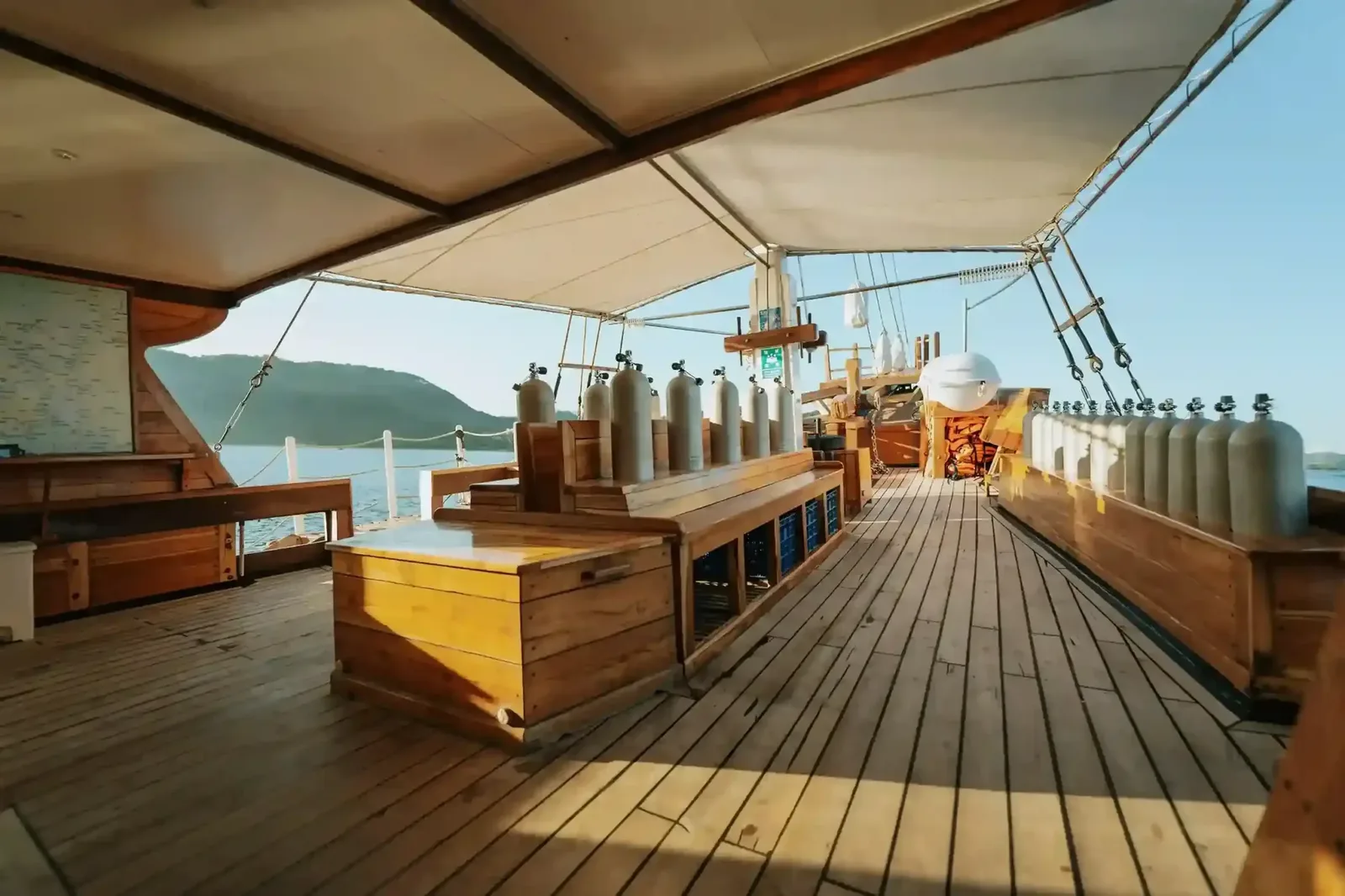
Scuba Diving Packing List for Indonesia (Liveaboard Edition)
Scuba diving packing list Indonesia means a clear, practical checklist of what to take on a dive liveaboard in Indonesia’s waters – from essentials and paperwork to camera gear, exposure protection and spare parts. This liveaboard packing list focuses on real conditions in Lombok, the Gili Islands, Komodo, Raja Ampat and wider eastern Indonesia, so you arrive prepared for the diving you’ll actually do.
As Trip Designer at Lombok Diving and partner to Komodo Luxury’s phinisi cruises, I’ll keep this grounded in real boats, real seasons and real baggage limits – not a theoretical “perfect” list.
Why a Specific Liveaboard Packing List for Indonesia?
Indonesia is not one destination underwater. Packing for a Gili Trawangan beginner course in July is different to a Raja Ampat photographer’s charter in February.
Across Lombok, the Gilis, Sumbawa, Komodo and Raja Ampat you can expect:
- Water temperatures: roughly mid‑20s °C to low‑30s °C across the year, with thermoclines in current‑swept sites.
- Air temps & sun: tropical, humid and very UV‑intense.
- Currents: some areas are gentle and beginner‑friendly, others require solid drift and negative‑entry skills.
- Transfer logistics: small planes and fast boats with strict weight limits.
A good liveaboard packing list for Indonesia has to balance comfort, safety, airline rules and the specific route you’re on.
Mid‑planning and want tailored advice for your route and dates? Message us on WhatsApp at +62 811-3823-875 or plan your trip and we’ll tune this list to your certification level and season.
Core Diving Documents & Admin (Non‑Negotiable)
You can improvise a spare mask strap onboard. You cannot improvise these.
1. Certification, Insurance & Medical
- Certification card(s):
- Open Water or Junior Open Water for basic sites.
- Advanced or equivalent strongly recommended for many Komodo and Raja Ampat itineraries, especially if you want to join deeper or current‑exposed dives.
-
Nitrox card if you plan to use enriched air, which is increasingly standard on higher‑end liveaboards.
-
Logbook or digital logs:
Important on routes with advanced sites. Cruise directors will often ask for recent dive history. -
Dive insurance:
A policy that explicitly covers scuba diving, evacuation and remote Indonesia (e.g. Komodo, Raja Ampat). Bring a printed certificate plus digital copy. -
Medical statement:
If you’ve recently had surgery, are pregnant, have chronic conditions or are 45+ with cardiac risk factors, liveaboards may request a doctor’s clearance dated within 12 months.
2. Travel Documents & Money
- Passport with at least 6 months validity beyond arrival and enough blank pages.
- Visa or proof of visa‑on‑arrival eligibility as required for your nationality.
- Printed flight e‑tickets and liveaboard vouchers (many small airports still like paper).
- Copies of travel insurance and emergency contacts.
- Cash in Indonesian Rupiah (IDR) for crew tips and small purchases; some boats accept card, but Wi‑Fi or terminals can fail.
Core Dive Gear: Bring vs Rent
Komodo Luxury’s phinisi fleet (Komodo Signature and Komodo Prestige) offers quality rental gear, but frequent divers usually prefer at least some personal kit.
Here is a practical breakdown of what to bring on a dive cruise versus what to consider renting, especially if starting your trip around Lombok and the Gilis.
3. Personal Gear You Should Almost Always Bring
- Mask – Your own, correctly fitted mask is non‑negotiable.
Add: - Spare strap
-
Small bottle of anti‑fog (or baby shampoo if you prefer)
-
Computer – Vital for multi‑day, multi‑dive itineraries.
- Familiar interface = fewer mistakes.
- Make sure you can switch between air and nitrox if needed.
-
Fresh battery or fully charged before departure; bring the charging cable.
-
Surface Marker Buoy (SMB) and reel
Many Indonesian dives are drifts. Boats usually provide SMBs, but having your own and knowing how to deploy it safely is a big plus. -
Regulators (if you dive often)
- Serviced within the last 12 months.
- Travel‑friendly configuration if you’re flying Garuda/Wings/Lion with strict baggage.
-
DIN/yoke adaptors if needed (Indonesia commonly uses yoke/INT, but check with the operator).
-
Dive computer download cable or Bluetooth app
Helpful for logging and for instructors/guides if there’s any safety query.
4. Gear You Might Rent, Depending on Your Trip
- BCD
Bringing your own is wonderful, but check: - Weight and bulk vs airline allowance.
-
Integrated weights vs belts (Komodo and Lombok boats can handle both).
If in doubt, request your size from the boat in advance and inspect it on boarding. -
Wetsuit
Many liveaboards carry 3 mm shorties or full suits. Bring your own if: - You get cold easily.
- You plan to do 3–4 dives per day over a week.
- You want specific thickness (e.g. 5 mm or hooded vest for thermoclines).
Exposure Protection for Indonesia’s Regions
Temperatures are variable by season, route and depth. The table below gives indicative ranges and suit suggestions; actual conditions can differ by year and site.
| Region & Typical Season | Indicative Water Temp Range | Suggested Exposure Protection | Notes (Currents & Comfort) |
|---|---|---|---|
| Lombok & Gili Islands (Apr–Nov prime) | ~26–29 °C | 3 mm full or 3 mm shorty; rashguard | Most fun dives & training; can get cooler with currents. |
| Komodo (Apr–Nov prime for north/central) | ~24–28 °C; cooler down deep | 3–5 mm full; optional hooded vest | Mix of warm north and cooler south; strong currents on advanced sites. |
| Raja Ampat (Oct–Apr prime) | ~27–30 °C | 3 mm full; thin hood or vest if you chill easily | Multiple dives per day; thermoclines possible. |
| Alor / Banda Sea crossings (seasonal) | ~24–29 °C; variable | 3–5 mm full + optional hood | Some cooler upwellings and current‑intensive sites. |
Key exposure items:
- Primary wetsuit according to the route.
- Thermal layer: 1–2 mm neoprene top or hooded vest for cooler downcurrents or night dives.
- Rashguard + boardshorts / leggings: Ideal for boat time and snorkelling.
- Reef‑safe sunscreen: High SPF for surface intervals; apply well before donning wetsuit.
Non‑Dive Essentials for a Comfortable Liveaboard
5. Clothing: Less Than You Think
Cabins on Komodo Luxury’s phinisi are well appointed, but still ship cabins: space is finite.
Pack:
- 3–4 quick‑dry T‑shirts or tops
- 2 pairs of lightweight shorts
- 1–2 swimsuits you can comfortably wear under a wetsuit
- 1 light long‑sleeve shirt or thin hoodie for evenings
- 1 pair light trousers or leggings (also good for transit days)
- Underwear and 2–3 pairs of socks (for trainers on transfers)
- Flip‑flops and one pair of closed shoes/trainers (airports, land treks)
Laundry is often limited or charged, so focus on quick‑dry fabrics.
6. Sun, Wind & Bug Protection
- Polarised sunglasses with strap
- Cap or wide‑brim sun hat (wind‑friendly design)
- Reef‑safe sunscreen and SPF lip balm
- Light buff or neck gaiter for sun and wind on tenders
- Compact rain shell or windbreaker – you may cross squalls, especially shoulder seasons
- Insect repellent for mangrove/island visits (not usually needed offshore)
Dive Accessories That Make a Big Difference
7. Safety & Comfort
- Spare mask (especially if you’re a photographer or wear prescription lenses)
- Small save‑a‑dive kit:
- Mask and fin straps
- Mouthpiece and zip ties
- O‑rings (for your own gear)
-
Lightweight multi‑tool if airline‑legal and packed in checked luggage
-
Reef‑safe defogging solution or your preferred alternative
- Ear‑care kit:
- Alcohol‑vinegar or commercial ear drops (if you’re prone to infections)
-
Any medication your doctor recommended for equalisation issues
-
Rehydration salts / electrolyte tablets – useful for hot, multi‑dive days.
8. Navigation & Communication
Most liveaboards provide full guiding, but additional tools can help:
- Whistle (attach to BCD)
- Mini torch / strobe for surface signalling
- Primary dive torch for night dives; plus:
- Charger / spare batteries
- Lanyard or clip
Night dives are commonly part of itineraries in Komodo and Raja Ampat, conditions permitting, so a reliable light is important.
Underwater Photography & Video: Pack Smart
Indonesia is paradise for shooters: reefs around Lombok and the Gilis are turtle‑rich and beginner‑friendly, Komodo offers dramatic currents and mantas in season, and Raja Ampat is known internationally for dense fish biomass and coral coverage.
But camera systems are heavy. Airlines and tenders don’t care how nice your housing is.
9. Camera Gear Priorities
- Main system:
- Camera body and housing
- Primary lens/port combination you actually use most
- Strobes / video lights with arms and clamps
- Spare O‑rings and lubricant for housing, strobes and ports
- Silica gel packs for humidity control
- Plenty of memory cards – remote areas don’t always have reliable card supply
- Card reader and fast SSD/HDD backup
Think about your style: macro vs wide‑angle vs mostly natural light. On many first‑time trips, a single good wide‑angle setup is enough for Komodo and Raja Ampat’s reefs and manta sites, with a compact for Lombok/Gilis macro and turtles.
10. Power & Charging
Indonesian standard is 220 V, 50 Hz, with Type C or F plug (two round pins).
Pack:
- Universal adaptor (or two, if you have heavy camera gear)
- Power strip (short cable) – some boats limit one plug per cabin
- Chargers for:
- Camera and strobes
- Dive computer
- Torch
- Phone / tablet / laptop
- Backup battery power bank – handy for flights and transit days
Komodo Luxury’s phinisi have dedicated camera rinse and setup space, but charging sockets can still be a bottleneck on full charters. Label your chargers.
Medication & Personal Care
Remote areas such as Komodo National Park and Raja Ampat have limited medical facilities. Bring:
- Prescription medications in original packaging with enough for your whole trip plus a buffer.
- Basic first‑aid:
- Pain relief
- Antihistamines
- Antiseptic cream
- Plasters
- Motion sickness tablets or patches – even if you rarely get seasick; crossings and overnight transits can be choppy.
- Reef‑safe after‑sun or aloe gel
- Personal toiletries: boats usually provide basics, but your preferred brands may not be available.
If you have a serious allergy (e.g. anaphylaxis), carry your EpiPen and inform the cruise director at check‑in.
Electronics & Comfort Extras
- Phone & offline apps:
- Translation, tide/weather, offline maps for shore days
- Kindle / e‑reader or paperback
- Noise‑cancelling or simple foam earplugs – useful if your cabin is near the engine room or if other guests are early risers.
- Lightweight dry bag (10–15 L) for tenders and shore excursions
- Small daypack for transit days around Bali, Lombok or Labuan Bajo
- Copy of your itinerary and flight schedule printed and digital
Wi‑Fi at sea is variable. Many guests appreciate the “forced offline” time, but download reading, shows and backups before boarding.
Baggage Strategy for Multi‑Region Indonesia Trips
Many of our guests combine Lombok/Gilis with Komodo liveaboards or follow a Raja Ampat cruise with time in Bali. That means multiple legs:
- Domestic flights (e.g. Denpasar–Labuan Bajo, Lombok–Makassar–Sorong)
- Fast boats (e.g. Bali–Gili–Lombok)
11. Weight and Bag Types
- Most Indonesian domestic airlines have 15–20 kg standard checked baggage, with add‑on options.
- Camera and dive computer gear should go in carry‑on; check each airline’s limits.
Tips:
- Use one main soft duffel (80–100 L) instead of hard suitcases; they fit better in cabins and tenders.
- Add a foldable duffel or packing cube system for separating clean/used clothes or dive vs non‑dive gear.
- Split critical items: keep mask, computer, certification cards and one change of clothes in carry‑on, in case checked luggage is delayed.
If you’re unsure how to balance rental vs own kit across several islands, message our team on WhatsApp or plan your trip so we can map it against your exact flights and boats.
What You Can Skip on an Indonesia Liveaboard
Save weight and clutter by leaving out:
- Excess clothing – onboard life is casual.
- Bulky towels – liveaboards provide these.
- Heavy coffee gadgets – good boats serve brewed coffee; Komodo Luxury cruises include barista‑style options on many departures.
- Hairdryers and straighteners – power‑hungry and often restricted; sea breeze styling is the norm.
- Full toolkits – the crew has professional tools; you only need a minimal save‑a‑dive kit.
Matching Your Packing List to Certification & Sites
Some Indonesian sites are easy, fishy and shallow–ideal for Open Water and family trips. Others involve strong currents, downcurrents or more depth, and demand training and equipment to match.
As a quick reference, here’s a high‑level overview of how site styles shift by region and what that means for gear and cert level. Depths and profiles are indicative only; conditions change with tides and seasons.
- Lombok & Gili Islands
- Focus: training, relaxed reefs, turtles; mostly beginner‑friendly. Ideal for Open Water divers, families and refreshers. Standard gear plus 3 mm suit is usually enough.
- Komodo (North & Central)
- Focus: reef slopes, pinnacles, mantas in season; many sites have moderate to strong currents. Advanced training and drift skills strongly recommended; SMB and own computer important.
- Komodo (South)
- Cooler water, nutrient‑rich, more challenging conditions. Thicker suit (up to 5 mm + hooded vest) recommended for longer dives.
- Raja Ampat
- Focus: rich reefs, fish schools, mantas in season, some current. Advanced preferred but experienced Open Water divers can enjoy many sites under guide supervision. Comfortable suit and good buoyancy control key for photographers.
- Crossings (Alor, Banda Sea, etc.)
- Variable conditions; some advanced and exploratory dives. Packing leans toward flexibility: layers for temperature shifts, robust computer, and good backup lights.
Wildlife such as mantas, whale sharks and schooling hammerheads is highly seasonal and never guaranteed. Packing a camera and wide‑angle dome won’t conjure them, but being dive‑ready with the right exposure protection and safety gear means you can seize the opportunity when conditions line up.
How Lombok Diving & Komodo Luxury Fit Into Your Packing Plan
Lombok Diving focuses on:
- Lombok & Gili Islands diving – training, fun dives, family‑friendly trips and first Indonesia experiences.
- Connecting itineraries through Bali, Sumbawa, Komodo, Labuan Bajo and onwards.
Our liveaboard partner, Komodo Luxury, operates:
- A premium phinisi fleet – Komodo Signature and Komodo Prestige – on routes through Komodo, Raja Ampat and eastern Indonesia.
- Recognised with TripAdvisor awards 2022–2025 for consistently high guest ratings.
- Part of Juara Holding Group Limited, founded in 2015.
Cruise prices vary by season, cabin type and route; for guidance, many guests budget into a mid–high four‑figure USD range per person for a week‑long luxury phinisi trip (last verified June 2026), excluding international flights.
We design multi‑region trips that align your certification level, season and budget with the right mix of Gili/Lombok shore diving and phinisi cruising. That planning step is where packing really gets refined.
If you’re already eyeing a particular sailing window or have dates in Komodo or Raja Ampat, send the details to [email protected] or plan your trip; we’ll advise what’s smart to rent vs bring for your exact route.
FAQs
What thickness wetsuit should I pack for a Komodo liveaboard?
Most divers are comfortable in a 3–5 mm full suit in Komodo. The north and central areas can be relatively warm, but some southern sites and deeper or currenty spots feel cooler, especially with multiple dives per day. If you tend to get cold, pack a 5 mm or add a thin hooded vest as a layer.
Can I rent all my scuba gear in Indonesia instead of packing it?
You can rent a full kit (BCD, regs, wetsuit, fins) on most quality liveaboards and many Lombok/Gili operators, provided you book in advance and share your sizes. Still, bring your own mask, computer and ideally SMB, as these are crucial for fit, familiarity and drift diving safety.
Do I need a dive computer for Indonesia liveaboards, or is a table enough?
For multi-day, multi-dive itineraries in Komodo or Raja Ampat, a personal dive computer is strongly recommended and often required. It allows you and your guide to track your exact profile across multiple dives and days far more safely and accurately than tables alone.
Is a reef hook recommended for Indonesia?
Reef hooks are used in some currenty regions worldwide, but in Indonesia you should only use one if your guide explicitly approves and shows where and how to deploy without damaging coral. Many sites in Komodo and Raja Ampat can be enjoyed using current-sheltered areas rather than hooking in, so follow local briefings.
How much luggage can I bring for an Indonesia dive cruise?
Your limit is usually set by domestic flights, not the boat. Many Indonesian airlines include around 15–20 kg of checked baggage, with paid options for extra; liveaboards themselves can handle more, but transfers by small planes and fast boats are the constraint. Check your tickets, then trim non-essential items and consider renting bulkier gear like BCDs on arrival.
If you’d like a route‑specific kit check (e.g. “October Raja Ampat, advanced diver, lots of photography”), send your draft list to [email protected], WhatsApp us at +62 811-3823-875, or plan your trip and we’ll refine it for you.