
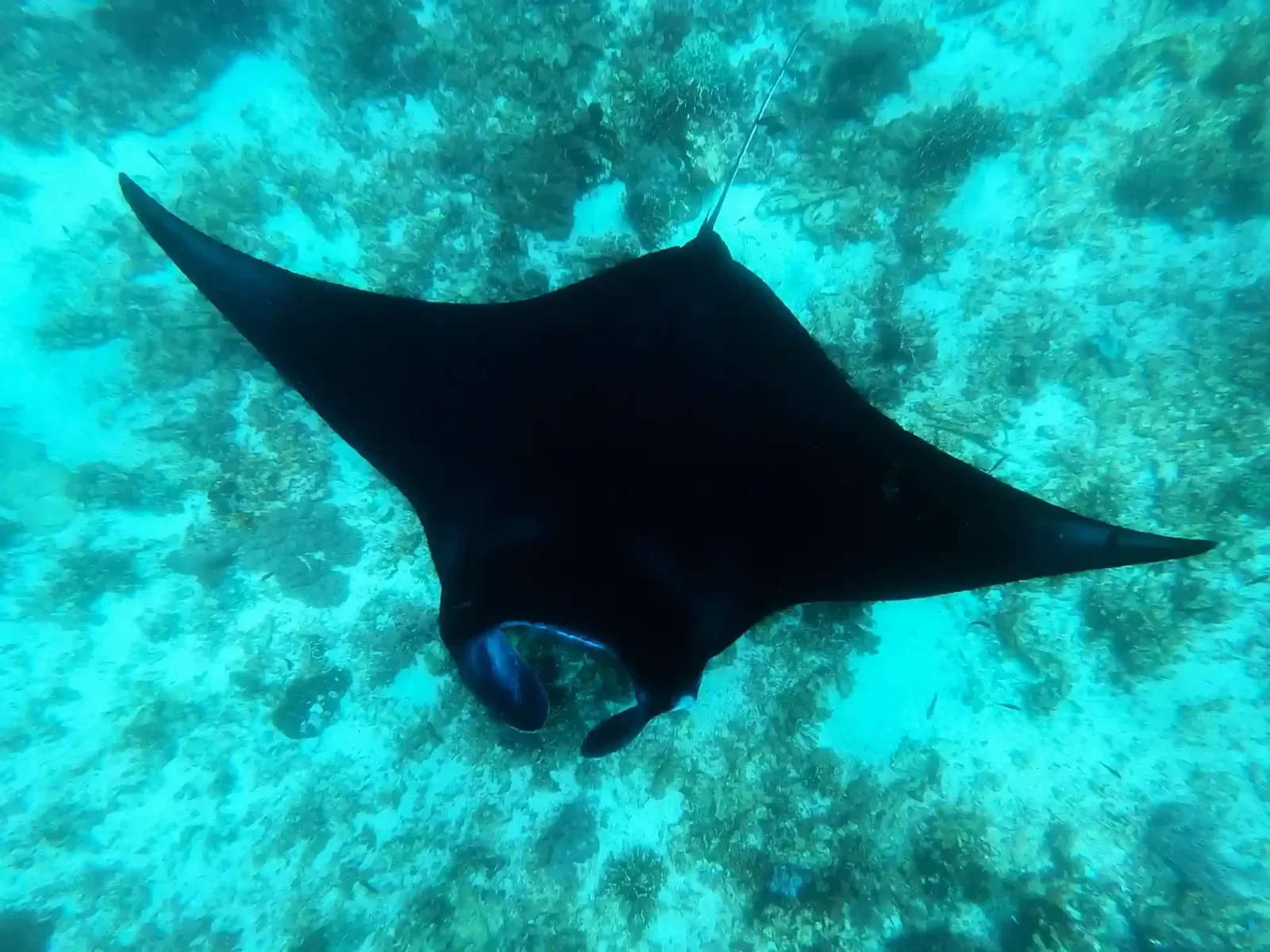
Manta Ray Diving in Komodo (From Lombok or Labuan Bajo)
Manta ray diving Komodo means planning dives in the Komodo National Park to see reef and (sometimes) oceanic mantas cleaning, feeding or cruising current points. In practice that usually means diving iconic sites like Manta Point and Manta Alley in season, from Labuan Bajo or on a longer liveaboard from hubs like Lombok or Bali.
What “Manta Ray Diving in Komodo” Actually Is
Komodo is one of Indonesia’s most reliable places to see manta rays, but it is not a manta theme park. You are diving wild, current‑swept channels and seamounts, on real ocean tides.
A few core points before we go deeper:
- Main manta sites: Manta Point (a.k.a. Makassar Reef) in central Komodo, and Manta Alley in the south, plus a handful of secondary cleaning stations.
- Typical depths: Most manta action is relatively shallow (roughly 5–20 m), but Komodo’s currents and surface chop can make even “shallow” dives demanding.
- Experience level: You can see mantas as an Open Water diver at the calmer sites, but the best and most consistent manta encounters are often on dives that require Advanced Open Water, confident current skills and sometimes drift experience.
- Seasonality: Komodo manta season patterns differ slightly between central and southern sites. You can see mantas year‑round, but density changes with plankton, water temps and monsoon shifts.
- Access: Day trips from Labuan Bajo, or multi‑day phinisi liveaboards that combine Komodo with other Nusa Tenggara islands. From Lombok, it’s almost always easier and safer to join a liveaboard than “day trip” Komodo.
Komodo Luxury, operated by Juara Holding Group Limited and founded in 2015, runs high‑end phinisi liveaboards such as Komodo Signature and Komodo Prestige, which are the serious way to do multi‑site manta itineraries without rushing.
If you want help choosing between Lombok/Gili diving and a Komodo manta liveaboard, send us a WhatsApp on +62 811-3823-875 or plan your trip by email.
Where You Actually See Mantas in Komodo
Komodo is big. “Seeing mantas” usually gets boiled down to two headline names: Manta Point and Manta Alley Komodo. In reality, you’re choosing between different exposure, current and season profiles.
| Site / Area | Zone | Indicative Depth Range* | Typical Cert Level | Current & Conditions | Main Manta Action |
|---|---|---|---|---|---|
| Manta Point (Makassar) | Central Komodo | Approx. 5–18 m | OW–Advanced | Often moderate–strong drift, can be choppy; usually good viz | Feeding trains, cruising mantas, occasional cleaning |
| Manta Alley | Southern Komodo | Approx. 5–25 m+ | Advanced+ with current comfort | Can be rough, surgey, strong currents; cooler water | Cleaning stations, large aggregations in season |
| Karang Makassar “edges” | Central Komodo | Approx. 10–25 m+ | Advanced | Faster drifts, sometimes down/directional currents | Gliding mantas along reef & rubble, by-catch pelagics |
| Secondary cleaning stations | Scattered, guides’ secrets | Variable | Advanced, guided only | Exposed; conditions vary a lot | Less traffic, chance of more natural behaviour |
*Depths are indicative only; actual profiles depend on tides, guides and conditions on the day.
Manta Point / Karang Makassar – Central Komodo
This is the “classic” Komodo manta site, accessible on almost every Labuan Bajo day trip and liveaboard route.
- Topography: Long reef and rubble plateau, sandy patches, coral bommies with cleaning action.
- Dive style: Often a drift dive. Your boat drops you upstream, you ride the current along the manta highway and surface for a pickup.
- Certification: Strong Open Water divers can handle it in friendly tides; Advanced Open Water is strongly recommended for flexibility and safety.
- Hazards: Boat traffic on the surface, varying current, and the temptation to chase mantas. Good buoyancy and situational awareness are critical.
On a good day you can have multiple manta passes, often at snorkelling depth. On a bad day you can have none. That’s the reality.
Manta Alley – Southern Komodo
Manta Alley Komodo is more remote, cooler and often much rougher, but in the right komodo manta season window it can feel like rush hour for rays.
- Topography: Rocks and channels forming an “alley”, with several cleaning stations and drop‑offs around.
- Dive style: Usually anchored or semi‑drift, with very specific positioning from experienced guides to keep you on the right side of the current.
- Certification: Realistically Advanced Open Water with solid current experience. Rescue and 50–100 logged dives makes it far more comfortable.
- Hazards: Swell, surge, downcurrents, thermoclines and low viz days. This is not a training site.
From Lombok we will only recommend Manta Alley as part of a properly run liveaboard, with enough onboard time to wait out bad tides and avoid being forced into marginal conditions “just to tick it off”.
Komodo Manta Season: When Your Chances Are Best
You can see mantas in Komodo any month of the year. But if you want to maximise your odds, you need to understand how komodo manta season really behaves between the central and southern sites.
As a simple rule:
- Central Komodo (Manta Point): Good encounters are possible year‑round, with slightly higher reliability in many operators’ experience between roughly April–December, depending on plankton and wind.
- Southern Komodo (Manta Alley): Historically productive from around the south‑east monsoon months, when cooler, nutrient‑rich water pushes in. Think roughly mid‑year, though each year is a little different.
Key truths:
- No month guarantees mantas. If a boat or brochure promises you “100% mantas every dive”, treat that as marketing, not reality.
- Day‑to‑day conditions matter more than the calendar. Wind, swell and tides can shut down south Komodo access for days. A liveaboard with a flexible route can adapt; a fixed day trip cannot.
- Water temperature swings. Central sites often feel like “normal” Indo diving – mid to high 20s°C. South Komodo can drop significantly cooler. Rashguard and 3mm may be fine in central; many divers are happier in a 5mm for repeated southern dives.
If you’re coming from Lombok or the Gilis and want mantas + decent weather + fewer closures, a broad window from about April–November generally works well, recognizing that shoulder months are always more variable.
Skills & Certification: Are You Ready for Komodo Mantas?
Komodo is not an entry‑level playground. You can absolutely see mantas here as a newly certified diver, but only if:
- You stick to the milder sites and tides.
- You are honest about your limits.
- Your operator is willing to schedule around your level (or keep you shallower / put more experienced guides with you).
From my perspective as a PADI Instructor, here’s a realistic skills matrix for manta dives:
- Open Water Diver (10–20 dives)
- Central Manta Point on easy tides, with a conservative profile and clear briefing. You’ll likely be limited to the calmer stretches and shallower depths.
- Advanced Open Water Diver (20–50 dives)
- Comfortable on most central manta dives in normal Komodo conditions. You can usually participate in drifts, do deeper edges, and combine manta dives with other sites like Batu Bolong & Tatawa on the same trip.
- Advanced + Rescue / 50–100 dives
- Comfortable for a wider range of tides, plus more exposed southern dives such as Manta Alley, assuming currents are within safe recreational limits.
- Technical / very experienced recreational
- Gives you more composure when conditions get challenging, but you are still bound by park and operator safety rules. Komodo is not a place for ego dives.
If your logbook is light, you can always use Lombok and the Gilis to get tuned up: buoyancy, SMB deployment and drift experience in relatively gentler currents. Then step up to Komodo.
Diving Komodo Mantas from Lombok vs Labuan Bajo
As Lombok Diving, our home base is Lombok and the Gili Islands. From here you have two real options for manta ray diving Komodo:
- Fly / ferry to Labuan Bajo and do day trips or short liveaboards.
- Join a longer phinisi liveaboard that includes Komodo as part of a broader route across Nusa Tenggara.
Labuan Bajo – Direct Gateway to Komodo
Labuan Bajo in Flores is the main jump‑off. The logic:
- Pros: Short boat rides, huge operator choice, cheap–luxury range, you can focus several days purely on Komodo mantas and classic sites like Castle Rock and Batu Bolong.
- Cons: Crowded in peak months, day‑trip schedules can be rigid, some budget operators cut corners on group size or briefings.
If mantas are your top priority and your holiday is short, flying into Labuan Bajo and joining a 3–4 night phinisi with Komodo Luxury is often the cleanest solution: central and southern manta sites, plus top reefs and dragons on land.
From Lombok & the Gilis – Extended Routes
From Lombok we usually think bigger: combine Lombok & Gili macro and reef with a multi‑day or multi‑week liveaboard that reaches Komodo and sometimes continues east.
Komodo Luxury’s fleet of luxury Indonesian phinisi – especially Komodo Signature and Komodo Prestige – operates itineraries that can connect:
- Lombok & Sumbawa (muck, reefs, occasional big pelagics)
- Komodo National Park (manta, big fish, dragons)
- Further east (depending on season – Alor, Banda Sea, Raja Ampat on longer programs)
This is the serious diver’s way to do mantas: multiple manta sites, repeated chances over several days, and the ability to adapt to conditions.
Why a Liveaboard Makes Sense for Komodo Mantas
You can see mantas on a single day trip. You are far more likely to have good encounters on a liveaboard, and that’s not sales talk – it’s simply how tides, wind and plankton line up.
Advantages of a liveaboard like Komodo Signature or Komodo Prestige:
- Route flexibility: If Manta Point is blown out, you can hit other sites and return on a better tide or wind direction.
- Multiple shots: Several manta dives across different days and locations massively increase your chances.
- Better timing: You’re already in the park for early‑morning and late‑afternoon windows, when day boats may be commuting.
- Serious dive deck & crew: Dedicated tenders, experienced guides and proper surface support for drift and current dives.
- Comfort in down‑time: Real cabins, good food and shaded sundecks matter after three or four high‑energy dives with current.
Indicative pricing for a luxury phinisi liveaboard in Komodo (last verified June 2026):
- Shared cabin trips: roughly US$350–700 per person per night, varying by season, cabin type and trip length.
- Private/full‑boat charters: from around US$4,000–10,000+ per night for high‑end vessels, depending on yacht, route and inclusions.
These are guide ranges only; your actual quote will depend on dates, group size and cabin choice. For current schedules and tailored quotes, message Komodo Luxury on WhatsApp +62 811-3823-875 or plan your trip and we’ll help you match a boat and route to your experience.
What You Actually See on a Komodo Manta Dive
It is very easy to get manta‑tunnel‑vision and ignore everything else. Komodo won’t let you.
On a typical manta‑focused day you might see:
- Mantas: Singles, pairs, or trains – gliding overhead, circling cleaning stations, barrel‑rolling through plankton clouds.
- Other pelagics: Occasional reef sharks, trevally, tuna, maybe a sleepy turtle on the sand.
- Reef life: Hard coral gardens, sponges and soft coral outcrops with anthias, wrasse and fusiliers – especially if your guide adds a second, more sheltered reef dive.
- Macro: In rubble areas and on calm days, look for dragonets, nudibranchs and shrimp around bommies. It’s not just about big animals.
What you should also expect:
- Variable visibility: Mantas like plankton; plankton cuts viz. Some of your best manta dives may be in green soup, not postcard blue.
- Thermoclines: Sudden drops in temperature as different water masses meet, especially in the south.
- Wildlife is wild: Some dives will be manta‑heavy. Some will be manta‑light or manta‑free. A good guide and sensible itinerary manage expectations.
Manta Etiquette: How Not to Harass the Rays
Komodo mantas tolerate divers, but they are not props. Poor behaviour is the fastest way to shut down a cleaning station.
Basic rules I insist on with my own students and guided divers:
- Stay low and still. Kneel or hover at the agreed depth. Let the manta make the approach.
- No chasing or touching. Ever. Don’t swim up into their path. If they change course to avoid you, you are too close.
- Control bubbles. Try not to blow a wall of bubbles directly into the cleaning station. If needed, move slightly down‑current.
- Mind your fins. Do not kick coral heads or bommies trying to “get closer”. You’ll damage the cleaning station the manta actually cares about.
- Cameras last. Nail buoyancy and situational awareness before you even think about wide‑angle rigs.
A good guide will position the whole group, not just individuals. If your guide asks you to back off, don’t argue – they’re protecting the animals and your chance of a longer, better encounter.
Combining Lombok, Gilis & Komodo: A Realistic Itinerary
If you’re starting in Lombok or the Gili Islands, a balanced manta‑focused trip might look like:
- 3–5 days Lombok & Gilis: Tune‑up dives, Advanced or Nitrox course, turtles, slopes and some macro. Depths are generally moderate, currents gentler than Komodo, visibility generous.
- Travel day: Either fly/ferry to Labuan Bajo, or board your phinisi in Lombok depending on your chosen trip.
- 5–7 days Komodo liveaboard: Central manta sites, chance to reach the south, plus classic Komodo reefs and maybe a land dragon walk.
- Optional extension east: For those with time and budget, continue on longer itineraries towards Alor, Banda or Raja Ampat in the right season.
From our side at Lombok Diving, we handle the Lombok & Gili training and prep; Komodo Luxury handles the phinisi cruising and Komodo manta logistics. No one can pay to change what we publish; if you proceed with our partner they may pay us a referral fee at no extra cost to you.
To talk through routes, seasons and certification, message us on WhatsApp +62 811-3823-875 or plan your trip with a quick outline of your dates and experience.
Safety Realities: Currents, Gear and Insurance
Komodo’s reputation for big animals goes hand‑in‑hand with serious water movement.
Key safety points:
- Currents: Expect horizontal current, up‑ and down‑currents, and eddies near seamounts and corners. If you’ve only ever dived sheltered bays, be conservative here.
- Surface protocols: You should be carrying a DSMB and spool, and be comfortable using them. On liveaboards this is standard; day boats sometimes cut corners. Don’t.
- Gear: Full‑length suit, reef‑safe sunscreen, whistle, and if possible a small audible or visual surface signalling device beyond your SMB.
- Insurance: Proper dive insurance that covers emergency evacuation and chamber treatment in Indonesia is non‑negotiable. Chambers are not on every island.
A reputable operator will cancel or move dives if conditions are unsafe for the group’s level. Listen when they say “not today”.
Ready to Plan Manta Ray Diving in Komodo?
From Lombok and the Gilis we see plenty of divers try to “squeeze” Komodo mantas into a rushed, under‑planned schedule. That’s the easiest way to waste money and burn time.
If you want to do manta ray diving Komodo properly:
- Be honest about your skills and certification.
- Choose the right season window for the areas you care about.
- Give yourself multiple manta dives on a flexible liveaboard itinerary.
- Use Lombok/Gilis as your warm‑up, not your only dives.
For tailored advice on combining Lombok, Gili and Komodo, or to get current Komodo Luxury schedules and pricing ranges, send a message on WhatsApp +62 811-3823-875 or plan your trip. Tell us your dates, cert level and rough budget; we’ll tell you what’s realistic.
Is Komodo good for beginner divers who want to see mantas?
Komodo can be challenging for beginners. Calm‑tide central manta dives are possible for confident Open Water divers with good buoyancy, but many of the best sites and tides are more suitable for Advanced divers. If you’re new, I strongly suggest doing extra dives or an Advanced course around Lombok or the Gilis first, then tackling Komodo with a conservative plan.
What is the best komodo manta season for Manta Alley vs Manta Point?
Central sites like Manta Point have decent manta chances through most of the year, often stronger from roughly April–December, while south‑Komodo sites like Manta Alley are usually more productive during the cooler, nutrient‑rich mid‑year period. Every year is slightly different, and no month guarantees mantas.
Can snorkellers see mantas in Komodo, or is it only for divers?
Snorkellers can and do see mantas at sites like Manta Point, often at very shallow depths. However, surface conditions, currents and boat traffic can make it risky without proper supervision. Always go with a reputable operator, use surface floats where provided, and follow the same manta‑etiquette rules as divers – no chasing or touching.
How many days should I allocate for manta ray diving in Komodo?
Absolute minimum is two full dive days, but for serious manta hunting I recommend at least a 3–4 night liveaboard, which usually gives you several manta dives plus time to adapt to conditions. Longer itineraries increase your chances and let you see more than just the headline manta sites.
Are Komodo mantas reef mantas or oceanic mantas?
Most encounters in Komodo are with reef mantas, although oceanic mantas are occasionally reported. As a visiting diver you won’t control which shows up on the day; what you can control is your buoyancy, respect for the cleaning stations and choice of a competent operator with flexible itineraries.