
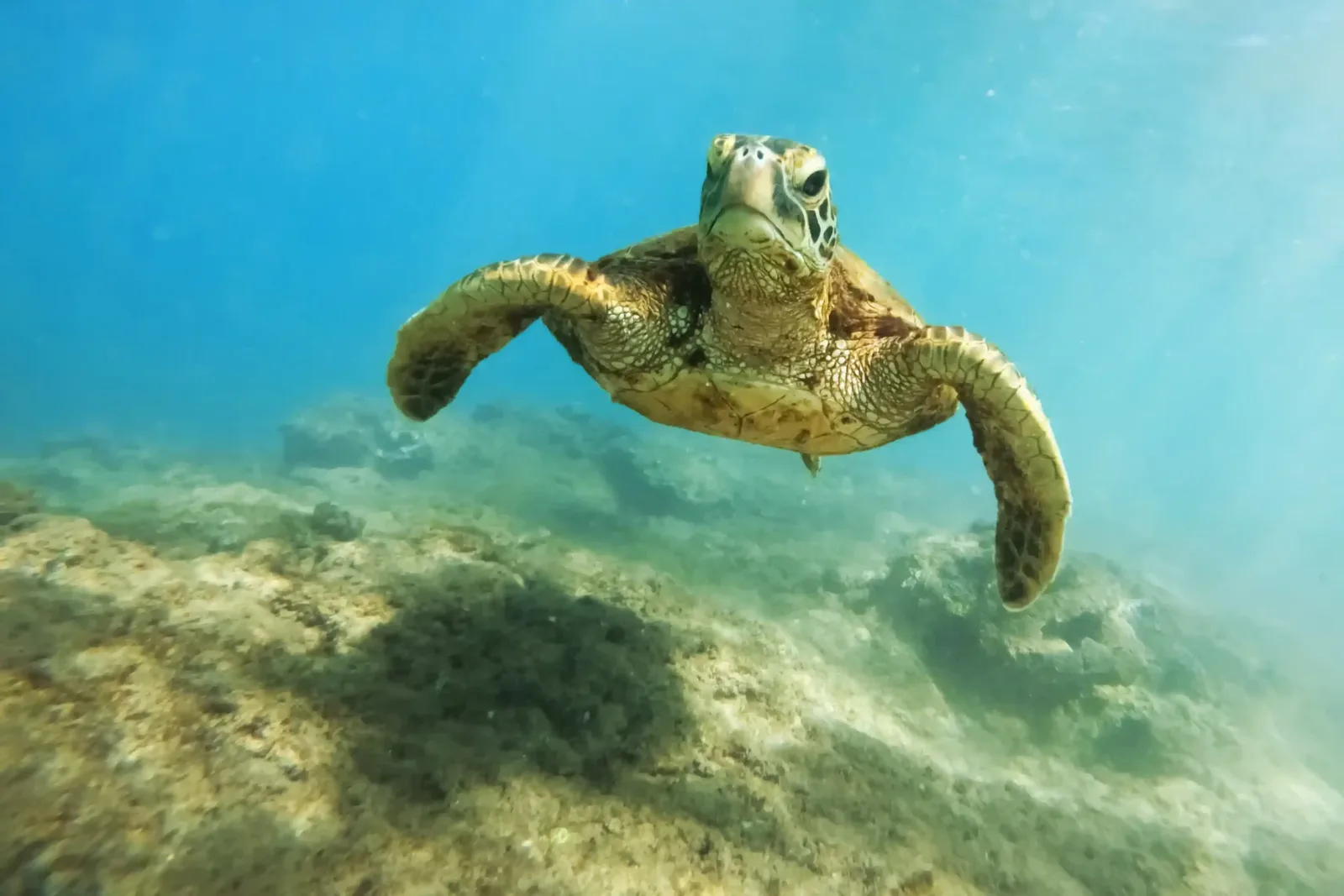
Diving with Turtles in the Gili Islands
Diving with turtles Gili Islands means relaxed reef dives around the three Gili Islands off northwest Lombok, where green and hawksbill turtles are seen on most dives. In practice, it is some of the easiest, most reliable turtle diving in Indonesia, with shallow sandy bottoms, coral ridges and calm conditions suitable from your very first dive.
Why the Gili Islands are famous for turtle diving
The Gilis (Gili Trawangan, Gili Air and Gili Meno) sit just off Lombok’s northwest coast, a short speedboat ride from Teluk Nare or Bangsal. Warm, relatively gentle currents and long-protected reef areas mean turtles are just part of the landscape here.
On a normal fun dive around the Gilis, seeing multiple turtles is more likely than not; on some days you stop counting. That makes turtle diving Gili a solid choice if you want high chances of encounters without committing to difficult currents or deep profiles.
Key points:
- Two main species: green turtles (Chelonia mydas) and hawksbill turtles (Eretmochelys imbricata).
- Encounter style: calm, unhurried – turtles resting on the reef, surfacing for air, or grazing on sponges and seagrass.
- Typical dive profiles: 10–24 m, with sandy areas shallow enough for beginners and snorkellers.
- Conditions: often gentle, but currents and visibility still change daily with tides and weather.
Main Gili turtle sites, depth ranges and skill levels
These are indicative patterns I see weekly as an instructor based in Lombok and the Gilis. Conditions change with tides, moon phase and seasonal weather; treat these as guidance, not promises.
| Dive site | Island | Indicative depth range | Typical certification level | Current & conditions | Turtle encounter style |
|---|---|---|---|---|---|
| Turtle Point / Turtle Heaven | Gili Meno | 5–22 m | Open Water or above; Discover Scuba in shallows | Usually mild drift; occasional moderate current | Resting greens on sand, cruising over reef, frequent close passes |
| Turtle City | Between Meno & Trawangan (or local variants) | 8–24 m | Open Water or above | Mild to moderate drift, occasionally stronger | Clusters of green turtles on ledges, some hawksbills on sponges |
| Halik / North Reefs | Gili Trawangan | 10–26 m | Advanced Open Water preferred for deeper sections | Can have stronger currents and downcurrents along the slope | Turtles gliding along the wall, mixed with schools of reef fish |
| Bounty Wreck & surrounding reef | Between Meno & Air | 7–24 m | Open Water or above; good for training dives | Variable; often manageable drift along the slope | Turtles cruising the slope; wreck is a bonus, not the main turtle zone |
| Gili Air East Reefs | Gili Air | 5–20 m | Open Water or above; Discover Scuba possible | Generally gentle; good visibility on many days | Turtles feeding on sponges and seagrass patches, easy for new divers |
Names vary slightly between operators (for example, “Turtle Heaven” vs “Turtle Point”), but the patterns are the same: shallow reefs, plenty of turtle traffic, and manageable dives for most certified divers.
Which turtles you see in the Gilis – and how close
You are almost always looking at two species:
Green turtles
Green turtles are the classic “Gili turtle”: large, smooth shell, often resting on sand or tucked under coral blocks.
- Behaviour: surprisingly relaxed. They tolerate divers nearby if you move slowly and avoid blocking their path to the surface.
- Habitat: sandy patches next to reef, gently sloping coral gardens, seagrass edges near Gili Meno and Gili Air.
- Size: many fully grown individuals, plus some younger sub-adults.
Hawksbill turtles
Hawksbills are a little smaller on average, with a more pointed beak and serrated shell.
- Behaviour: more active, frequently seen feeding on sponges and small invertebrates.
- Habitat: rougher coral structure, walls or bommies; more common along the north and west sides of Gili Trawangan and Meno.
- Encounters: often shorter; they move around more and don’t sit on the sand as long as greens.
Respectful distances matter. If you kick hard toward a turtle, it will leave. If you settle neutrally buoyant, breathe slowly and keep your hands close to your body, you can share the reef with them for several minutes without stress.
Who can go turtle diving in the Gili Islands?
Gili turtle sites cover the full range from first-timer experiences to deeper drifts that require solid skills.
Try dives and first-time divers
If you want to swim with turtles Lombok on your very first dive, the Gilis are one of the easier places to do it.
- Discover Scuba Diving (DSD) / Try Dive: Typically limited to around 12 m and always guided 1:1 or 1:2 by an instructor or experienced divemaster.
- Typical sites: sheltered parts of Turtle Point, Gili Air east reef, or similar sandy-bottom sites with coral heads.
- What you can expect: brief skills in very shallow water, then a slow tour. Turtles often appear in 5–10 m, well within DSD limits.
You do not need a certification card for a one-day introductory dive, but you do need to be medically fit to dive and comfortable in the water. If you train with us around Lombok and the Gilis, we will be honest if conditions that day suit a beginner or if it is better to wait a tide cycle.
Open Water divers
Certified Open Water (or equivalent) divers are in the sweet spot for most turtle diving Gili trips:
- Depths: 10–18 m is plenty; many turtles are seen above 15 m.
- Sites: Turtle City, Bounty, Air reefs, and the shallower sections of Trawangan and Meno slopes.
- Skills: basic buoyancy, no need for advanced current-handling as long as conditions are normal.
You should still listen carefully to the briefing. Currents around the Gilis are generally manageable, but they are not a theme-park ride. On some days certain corners can have brisk drifts, downcurrents or swirling eddies, especially on spring tides.
Advanced and experienced divers
If you are Advanced Open Water or higher, you unlock more variety:
- North and west slopes: deeper contours with more relief; turtles hang along these walls in mid-water.
- Stronger drifts: on days with more current, experienced groups can cover long stretches of reef with multiple turtle encounters and bigger schooling fish.
- Nitrox: useful on multi-dive days to extend no-deco time around 18–24 m while keeping a reasonable margin of safety.
Advanced certification also matters if you want to combine turtle dives with more demanding Lombok sites outside the Gilis (for example, around the north coast or further south), or extend to Komodo and beyond on liveaboard cruises.
Seasonality: best time to see turtles in the Gilis
Turtles are resident year-round. You do not need a particular month to have a good chance of encounters.
What does change with the seasons is visibility, surface conditions and water temperature:
- April–June
- Often a very good window. End of the wetter season into early dry: warm water, relatively stable conditions, decent visibility many days.
- July–September
- Peak dry season. Water can be slightly cooler; visibility can improve, but trade winds can bring some surface chop. Popular period, so boats and sites are busier.
- October–early December
- Transitional; many calm days, sometimes excellent visibility. Good period if you want fewer crowds.
- Late December–March
- West-monsoon influence. You still dive most days, but rain, wind and occasional storms affect surface conditions and visibility. Warm water, frequent turtle sightings continue.
Weather is never guaranteed. We adjust site choices daily: if one side of the islands is blown out, we shift to more sheltered spots. The goal is the same: safe dives, reasonable visibility and the kind of calm, extended turtle encounters that the Gilis are known for.
Turtle diving ethics and photography tips
Turtles tolerate divers, but there is a clear line between a relaxed encounter and harassment.
Basic interaction rules
- Minimum distance: keep at least a couple of body lengths away; closer only if the turtle approaches you.
- Never block ascent: turtles must reach the surface to breathe. Do not hover directly above one.
- No touching or riding: apart from being illegal and unethical, it stresses the animal and damages its protective biofilm.
- Control your fins: avoid kicking the sand or coral when you get excited; you will ruin visibility and damage the reef.
- Group discipline: in a large group, take turns closer to the turtle rather than creating a tight circle.
We reinforce this on every briefing. The Gilis are busy; how we behave now determines what you and other divers will see ten years from now.
Photographing turtles
You do not need a huge camera rig to get good turtle shots in the Gilis. A compact with a wide-angle wet lens, or even a small action camera, is enough.
- Stay slightly below and to the side for a cleaner background and natural light.
- Do not chase; anticipate the turtle’s path and let it swim toward or past you.
- Avoid strobes in the turtle’s face from close range; backscatter in sandy areas is also a problem.
- Practice buoyancy away from animals first; your camera is useless if you cannot hold a steady hover.
If you are keen to improve your turtle shots, build that into a PADI Advanced course or a dedicated photography workshop around Lombok and the Gilis. We can structure dives to focus on composition and buoyancy rather than just ticking off species.
Combining Gili turtle dives with Lombok & liveaboards
Many divers use the Gilis as an easy entry, then step out into more ambitious trips once they are comfortable.
Lombok Diving: your Gili & Lombok base
Lombok Diving is the specialist authority for this region, focusing on:
- Daily dive trips around the Gili Islands and north Lombok.
- PADI courses from beginner through professional level.
- Honest site selection based on real conditions, not marketing promises.
- Straight talk about advanced spots like Belongas Bay (hammerhead season, heavy swell and serious currents mean you need the right experience and certification, not just enthusiasm).
If you are planning to swim with turtles Lombok early in your holiday, reach out early so we can match your travel dates to tides and typical weather. You can plan your trip with us directly or message our team on WhatsApp at +62 811-3823-875 for options and rough schedules.
From Gili turtles to Komodo mantas and Raja Ampat reefs
Once you have logged some easy Gili dives and tuned your buoyancy next to turtles, many divers feel ready for a liveaboard. For that step up, we work with Komodo Luxury, operated by Juara Holding Group Limited.
Komodo Luxury is a specialist Indonesian liveaboard operator, founded in 2015, running premium phinisi-style vessels in:
- Komodo National Park (Flores)
- Raja Ampat (West Papua)
- Other eastern Indonesian regions on selected itineraries
Their current luxury phinisi fleet includes:
- Komodo Signature
- Komodo Prestige
These are genuine wooden phinisi yachts equipped for modern dive cruises: ensuite cabins, proper dive decks, compressor and nitrox on many trips, and crew who understand current-heavy sites.
Komodo Luxury has been recognised with TripAdvisor Travelers’ Choice awards for 2025 and 2026, reflecting consistent guest feedback across multiple years. No one can pay to change what we publish; if you proceed with our partner they may pay us a referral fee at no extra cost to you.
How the experience differs from Gili turtle dives
Expect very different conditions once you leave the Gilis for these regions:
- Komodo: World-class drifts, potential manta cleaning stations, large schools of fish, and serious currents on certain sites. Advanced Open Water and solid current experience are strongly recommended for the more iconic locations. Manta rays are seasonal and wild; no operator can promise them on a fixed date.
- Raja Ampat: Huge biodiversity, lush coral, regular currents, longer move days between zones. Many dives are moderate, but some channels run hard and require calm, experienced divers.
Turtles are still present on these routes, but they become just one part of a larger picture that can include sharks, mantas and dense schooling fish. Shark, manta and whale shark encounters are always subject to season and luck; treat them as high-probability possibilities in the right periods, not guaranteed inclusions.
Indicative trip formats and pricing
Liveaboard itineraries vary by season and region, but you typically see options like:
- Komodo: around 3–7 days, focusing on the national park and surrounding islands.
- Raja Ampat: around 7–10+ days, with more sailing time between regions and island groups.
Pricing for luxury phinisi cruises in Indonesia with Komodo Luxury usually falls in a wide range depending on cabin type, trip length, and season. As of last verified June 2026, you should budget from the mid-hundreds to low-thousands of US dollars per person for shorter trips, up to several thousand US dollars per person for longer Raja Ampat and extended itineraries. Exact quotes depend on departure date, cabin category and occupancy.
To discuss specific dates and indicative budgets, you can plan your trip with our team or message via WhatsApp at +62 811-3823-875 or email [email protected].
Practical tips for diving with turtles in the Gilis
Choosing your base island
- Gili Trawangan: More dive centres, more nightlife, busiest scene. Good if you want multiple departures and social evenings between dives.
- Gili Air: Quieter, but still with several reliable dive shops. Easy access to Air’s reefs and nearby turtle sites.
- Gili Meno: Smallest and calmest; some operators run daily boats that hit Meno’s turtle sites even if you are based on Trawangan or Air.
Lombok Diving can help you build a plan that makes sense with your ferry schedule, Lombok mainland stays and possible extensions into more advanced sites.
What certification and experience you should have
For relaxed turtle-focused dives in the Gilis:
- Ideal: PADI Open Water Diver or equivalent, 4–20 logged dives.
- Good to have: Recent experience in the last year, or a refresher session if it has been a while.
- For stronger drifts or deeper walls: Advanced Open Water and comfort in currents.
For Komodo and Raja Ampat liveaboards:
- Preferable: Advanced Open Water plus 30–50+ logged dives, including recent experience in currents. Some itineraries may accept less if you are comfortable and ready to follow conservative dive plans, but more experience equals more enjoyment and safety margin.
Equipment and thermal comfort
Water around the Gilis is generally warm, but occasional cooler currents do hit, especially mid-year:
- Most divers: 3 mm full wetsuit is comfortable.
- If you get cold easily: add a hooded vest or 5 mm suit, especially if doing three dives per day.
- Essentials: Good-fitting mask, fins you can control in currents, and a surface marker buoy (SMB) used by your guide as standard safety equipment.
Health, safety and briefings
- Listen to the dive briefing: entry/exit, expected current, max depth, and signals are non-negotiable.
- Be honest about your experience: If you have not dived in years, say so. We would rather run a slower dive and keep you relaxed than push you into a drift you cannot handle.
- Stay conservative: Even if your computer allows more, staying shallower and keeping longer safety stops costs nothing and adds margin.
FAQs: Diving with turtles in the Gili Islands
Can beginners see turtles on their very first dive in the Gilis?
Yes. Many first-time divers on a Discover Scuba or during their Open Water course see turtles in shallow water around Gili Meno, Gili Air and between the islands. Conditions always depend on tides and weather, but the combination of sandy bottoms, gentle slopes and resident turtle populations makes this one of the easier places in Indonesia for beginners to have relaxed turtle encounters.
Are turtle sightings guaranteed on Gili dives?
No. Turtles are wild animals and no operator can guarantee a sighting on a specific dive. That said, around the Gilis we see turtles on most dives over a typical week, especially at established sites like Turtle Point, Turtle City and the north slopes. If you do several dives around these islands, your chances of seeing multiple turtles are very high, but it is never a contract.
Do I need Advanced Open Water to dive with turtles in the Gilis?
No. Most turtle-focused sites are entirely suitable for Open Water divers, and even for supervised beginners on try dives in the shallows. Advanced Open Water becomes more valuable if you want to explore deeper sections, handle stronger drifts confidently, or use the Gilis as preparation for current-heavy regions like Komodo and Raja Ampat.
What is the best month to visit the Gilis for turtle diving?
Turtles are present all year, so the “best” month is more about overall conditions and your preferences. April–June and September–November often offer a good balance of calm seas, warm water and reasonable visibility, with fewer crowds than peak July–August. Even in the wetter months you can usually dive, but rain and wind may affect surface conditions and visibility.
How do Gili turtle dives compare to Komodo or Raja Ampat liveaboards?
Gili turtle dives are generally shallower, easier and more focused on relaxed encounters with resident turtles on sandy slopes and coral gardens. Komodo and Raja Ampat liveaboards introduce stronger currents, deeper sites, more remote locations and a broader range of big animals and fish life. Turtles are still part of the picture there, but mantas, sharks and dense schooling fish become more prominent. Advanced skills and more experience are recommended for those trips.